
News
November 2, 2025
GRAND EGYPTIAN MUSEUM OPENS TO THE WORLD
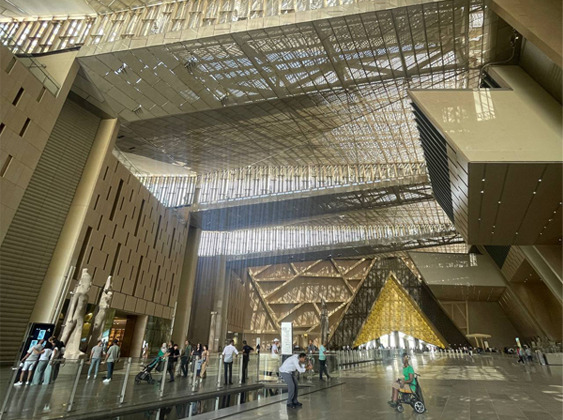
This long-awaited museum that explores the achievements of one of humanity’s most fascinating civilizations is now open to the public after decades of design and construction. Ever since the breathtaking architecture of Heneghan Peng won the international open competition in 2003, millions have waited for the opening. Congratulations to the people and government of Egypt, their dedicated Egyptologists, conservators, planners, designers and engineers, and to the many supporters of the Grand Egyptian Museum world-wide.
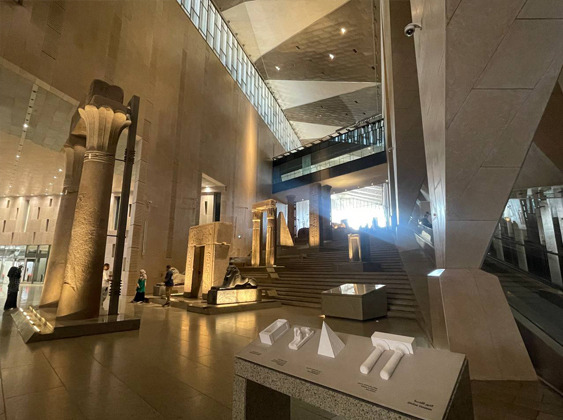
“Spanning 3,500 years of ancient history, the Grand Egyptian Museum will be the world’s largest museum dedicated to a single civilization, housing over 100,000 artifacts, including the entire Tutankhamun collection. This global landmark beside the Giza Pyramids will be the heart of scientific, historical and archaeological discovery. Lord Cultural Resources is honoured to be a part of this once-in-a-generation international museum project for the people of Egypt and the world.”
— Gail Lord, Co-founder, Lord Cultural Resources.
The opening of the Grand Egyptian Museum brings back some incredible memories for Yvonne Tang, Lord Senior Director, who along with Katherine Molineux, Robert LaMarre and Gail and Barry Lord, was part of the Lord team who was there at the very beginning. We asked her to share her thoughts, photos and memories.
“In 2010, a small group of Lord colleagues and I moved to Cairo to work on a huge new pharaonic museum. It was a dream job for me: not only would I be in front of some of the same iconic artifacts I’d only before seen in books, but I would develop lifelong skills and experience working alongside talented teams of consultants.”
— Yvonne Tang, Lord Senior Director
how this project started back in 2010
By Yvonne Tang
In 2010, a small group of Lord colleagues and I moved to Cairo to work on a huge new pharaonic museum. It was a dream job for me: not only would I be in front of some of the same iconic artifacts I’d only before seen in books, but I would develop lifelong skills and experience working alongside an international group of consultants.
Our role as part of the Hill International consultant team was exhibition project management. We attended overarching project meetings, gathered curators for artifact placement, coordinated with the collections team, collaborated with exhibit designers, took part in architectural and engineering review, wrote minutes and reports and provided input on schedules. We met with various Egyptian ministers, international dignitaries and updated the press on several occasions.
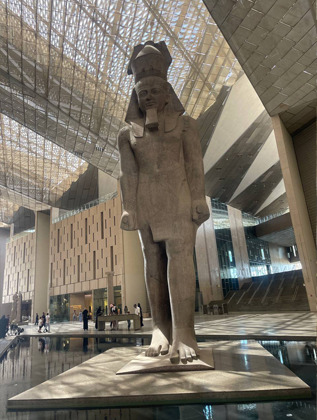
Through it all, I learned the order and difference between the Pharaonic kingdoms, how to read the cartouches of most (but not all) pharaohs and even picked up a bit of spoken Egyptian Arabic. We regularly visited and worked at the Egyptian Museum in Cairo’s Tahrir square. I had the privilege of accompanying curators throughout the museum, to visit the back-of-house collections spaces, and see collections being documented and cared for in the new collections care facility. I had regular lunches with Ramesses II, who was outside our office awaiting his final home in the lobby at the new Museum.
I still remember becoming breathless in a room full of King Tut’s objects, and the mental gymnastics that came along with if and how we could move Cleopatra’s fan, working to differentiate the never-ending ushabti’s for display, and trying to locate one particular architectural drawing in a room of 10,000.
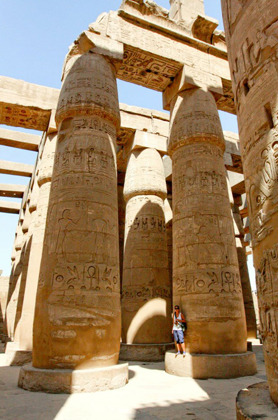
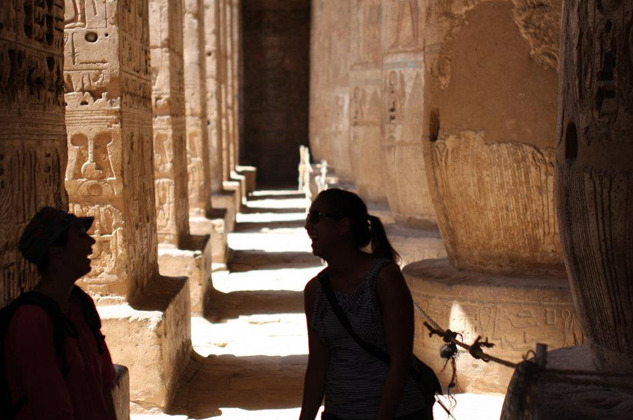
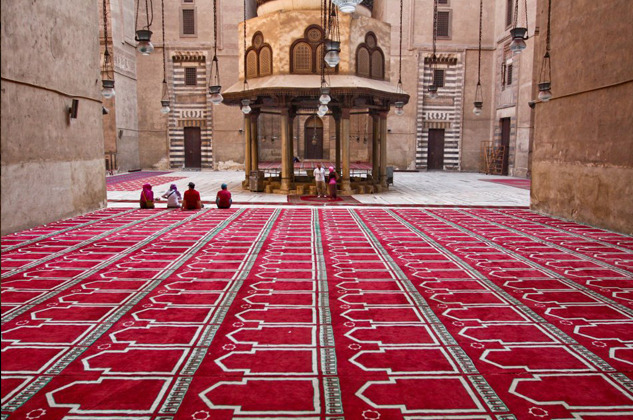
During my off-time, I saw as much as I could of Egypt, taking Arabic lessons and making new friends. I went from Alexandria to Abu Simbel, chatting with everyone, eating all the foods, and engaging with people and their crafts. On weekends, we would gather for informal architectural walking tours, seeing mosques, historic sites, cemeteries, markets and neighbourhoods.
I’m forever grateful for the Japanese team of engineers for sharing their bento box lunches, for our Egyptian colleagues for inviting us to break fast with them at Eid, for the curators and collection team for sharing their knowledge with both patience and enthusiasm, and for the warmth and care of all before, during and after the Arab Revolution. I will forever be so thankful for the trust, collegiality and memories.
And now, finally, the new Grand Egyptian Museum has opened. I’m so honoured to have played a role and I can’t wait to visit.